Conversation Decoder
Decode the unsaid. Repair the connection.
About
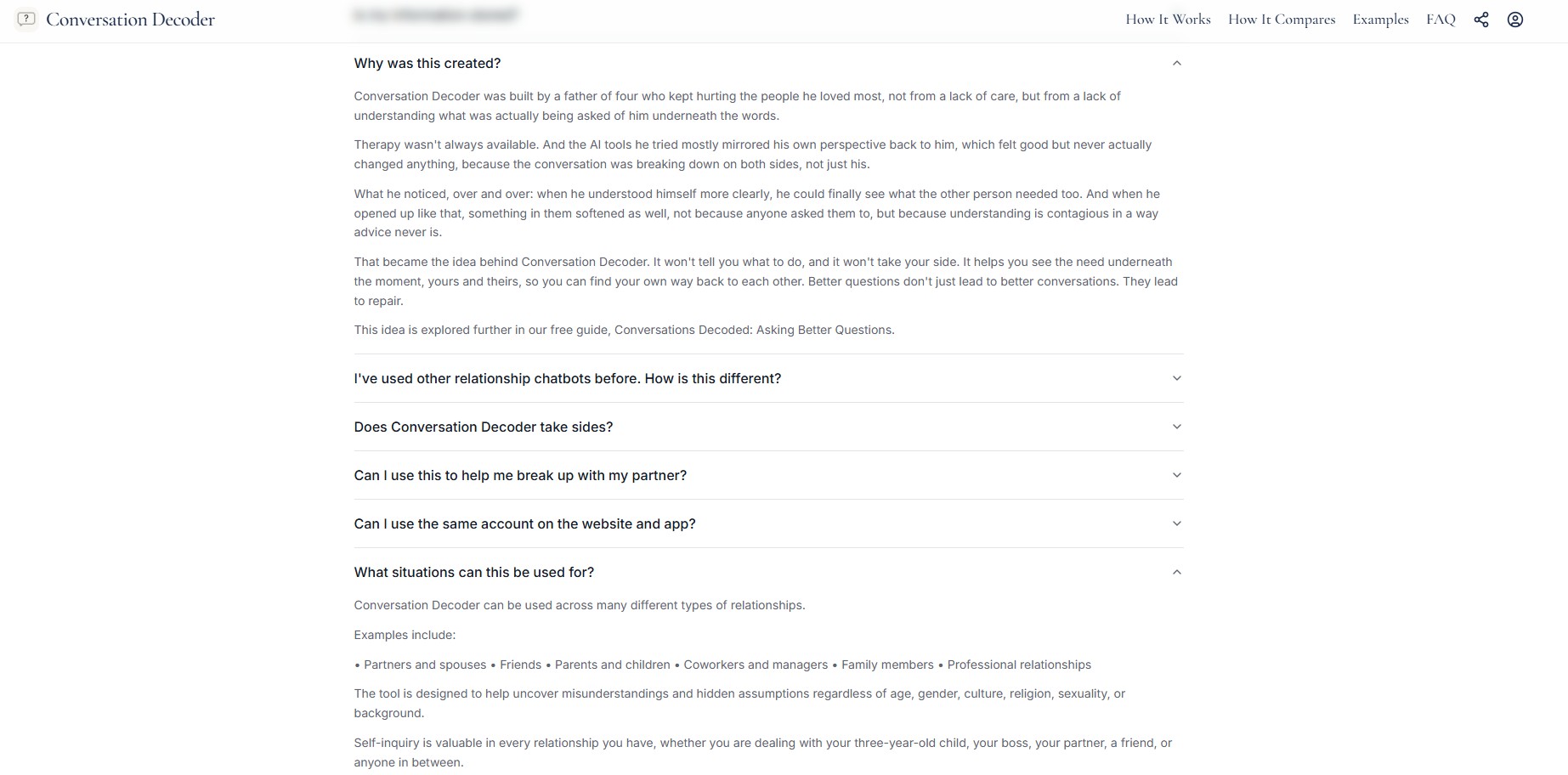
Conversation Decoder was built by a father of four who kept hurting the people he loved most, not from a lack of care, but from a lack of understanding the conversation context.
Therapy wasn't always available. And the AI tools he tried mostly mirrored his own perspective back to him, which felt good but never actually changed anything, and often caused more harm, because the conversation was breaking down on both sides, not just his.
Something else was required, and this spawned the birth of Conversation Decoder. What started as a helping hand at home has expanded to help others in need.
Features
- Decodes difficult conversations
What makes it different
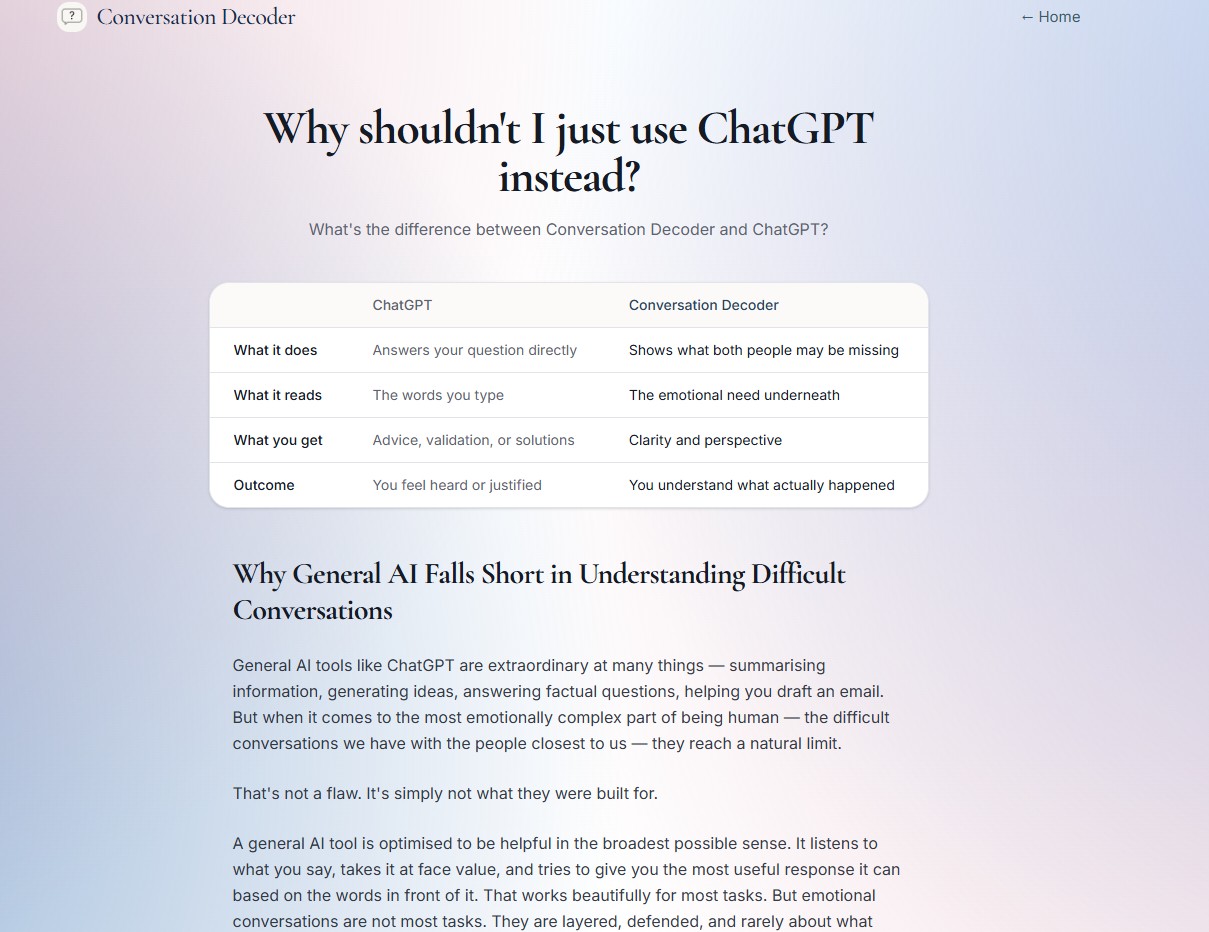
Popular LLM's like ChatGPT will hear your side, empathise, and suggests action. Conversation Decoder reads the emotional need underneath the words, and provides insight and questions to adjust the users perspective.
Screenshots
How it works
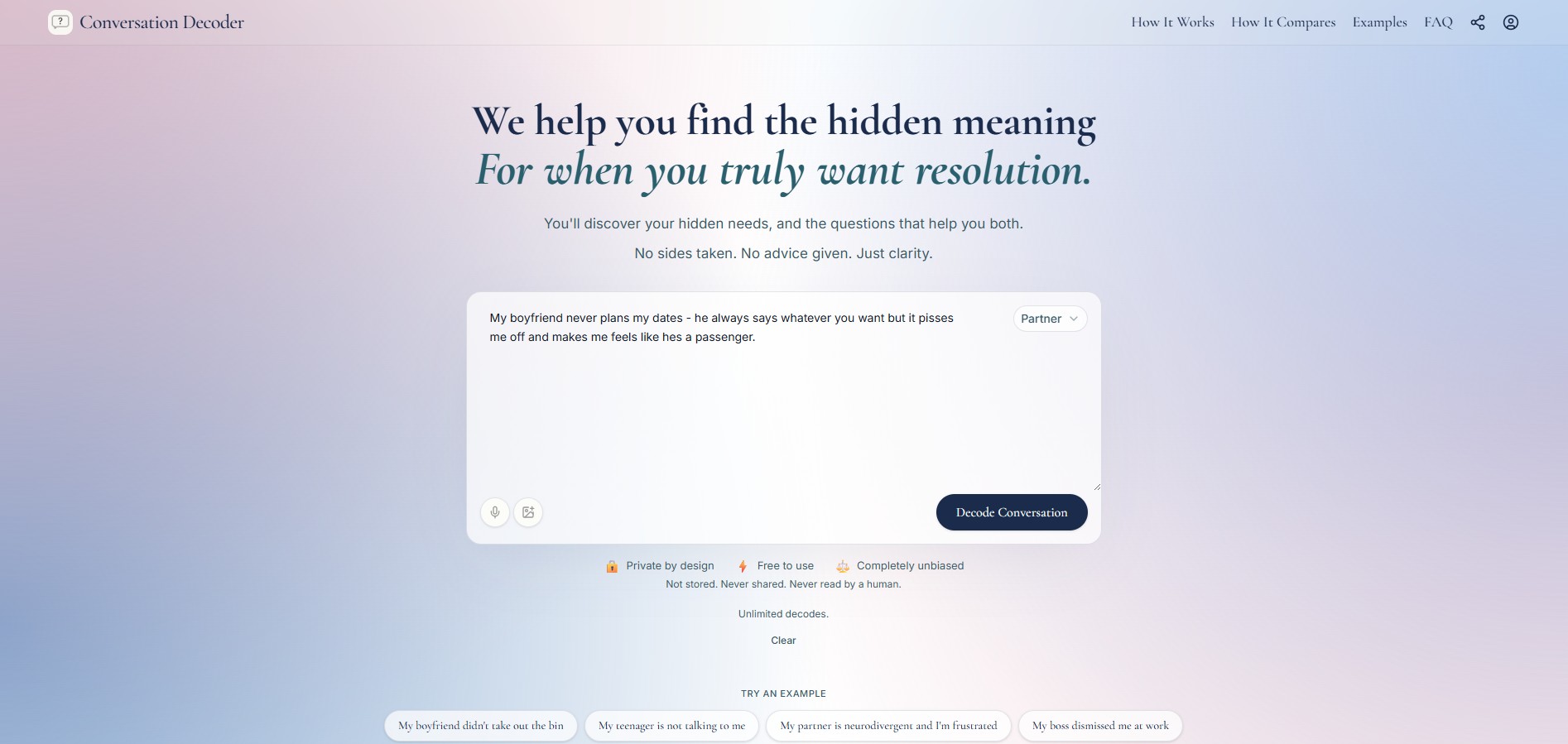
The idea behind the product is simple. The user inputs a conversation or social situation that they do not fully understand into the text box, and hits Decode Conversation.
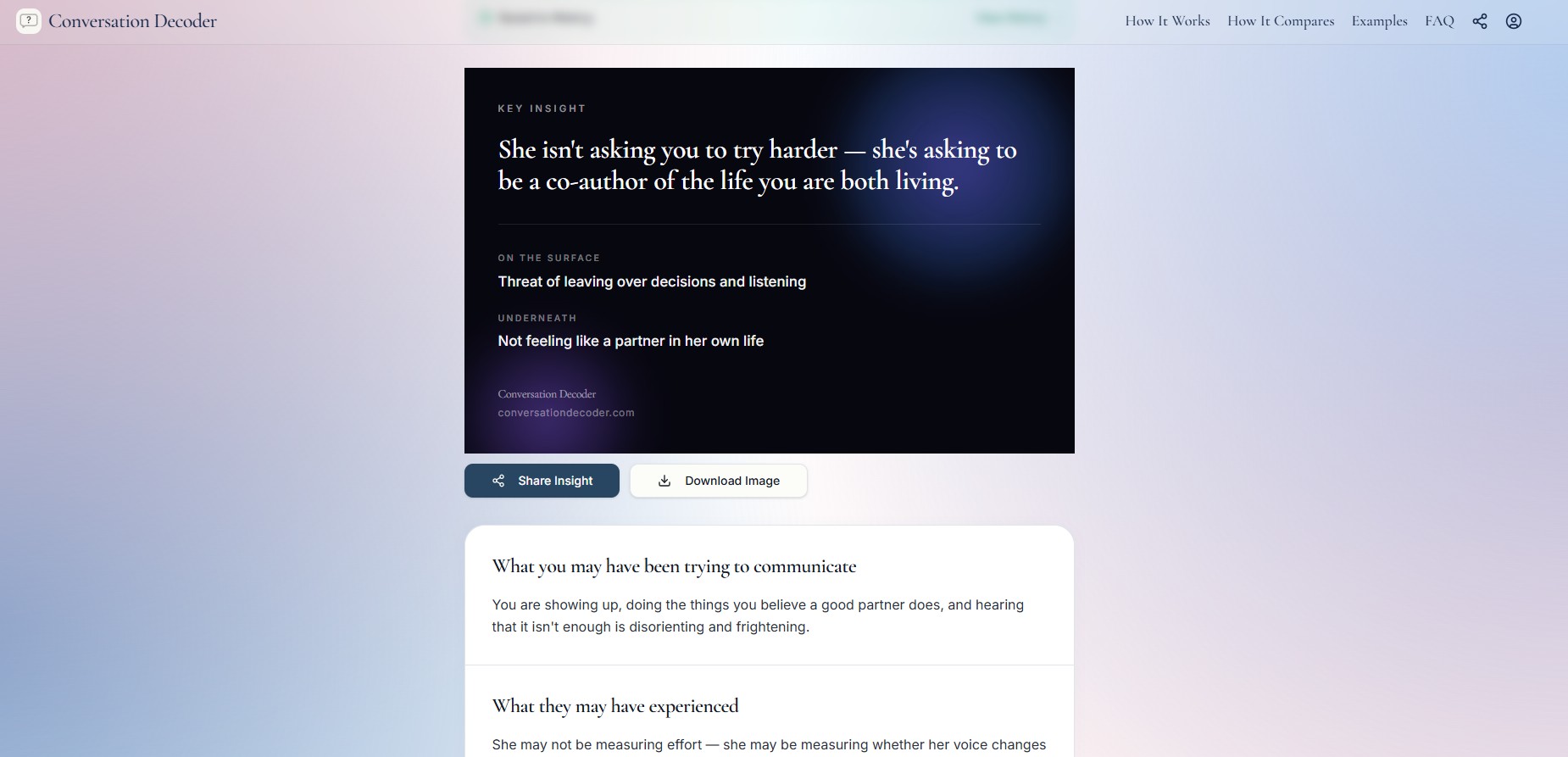
The output the user receives includes a key insight into what happened, the likely experiences of each participant, and the hidden questions that were being asked underneath but weren't spoken about directly.
The product is free to use, with or without a signup, once a day. After signup, the user gets a 7 day free trail of the premium features, which includes unlimited use plus further insight and analytics.
Demo
FAQ
Will this tell me what to do in the situation I'm describing?
No. Conversation Decoder is designed to help you discover your own insights rather than tell you what to do. Its purpose is to help you explore perspectives, assumptions, misunderstandings, and blind spots so you can decide for yourself what the best way forward may be.
Is it AI?
Yes. Conversation Decoder uses AI to identify possible perspectives and misunderstandings. However, it is specifically designed not to take sides, provide ultimatums, or tell you what action to take. If you are looking for validation in an argument, this may not be the right tool. Its purpose is self-inquiry, reflection, and understanding.
Why don't I just use ChatGPT to help me understand my situation?
When you leave a conversation with a general AI tool, you usually feel heard. You feel justified. You feel like someone finally understood your side. That is a real and valuable experience — but it is not the same as understanding what actually happened. Conversation Decoder isn't trying to be your advocate. It isn't trying to tell you what to say next. It is trying to show you what was actually
Why didn't the response doesn't feel accurate.
Conversation Decoder is not designed to tell you what is true or give definitive answers. Its purpose is to highlight areas for self-inquiry and offer perspectives you may not have considered. The quality of the insights depends heavily on the quality of the information provided. If a response doesn't resonate, try again with additional context, more detail, or a clearer explanation of the situa
Is my information stored?
Anonymous analyses are not saved. If you choose to create an account, your analyses are stored only in your private history so you can revisit them later. Your conversations are private and are never shared, and no human ever sees your questions.
What relationships is this designed for?
Conversation Decoder has been designed to cater for any relationship between two people. This includes spouses, partners, children, colleges, friends, or family. All communication between people is nuanced, so all relationships could benefit from genuine understanding.
What founders say
““This helped me with my son. I'm so grateful.””
— Anonymised (Privacy)
““My partner and I finally had a real conversation. It was tough, but it's progress.””
— Anonymised (Privacy)
Founder
Devin Kelly